
TerraDT is organising an Urban Impact Model Workshop in Barcelona this February, bringing together public and private stakeholders working at the intersection of cities, climate adaptation and decision-making.
The workshop will showcase how TerraDT’s urban impact models translate high-resolution climate and environmental data into actionable insights for cities. Participants will explore use cases relevant to urban planning and climate adaptation policies with a focus on heat stress, air quality, extreme events, and their impacts on people, infrastructure, and assets. The event will also host experts from our sister project UrbanAIR, the digital twin for urban climate action.
Who should attend?
Designed for city and urban planners, local and national authorities, weather and health services and environmental agencies but also for real estate investors and insurance companies, the event will offer a space to engage directly with scientists and model developers. Through targeted presentations and interactive discussions, attendees will gain a clearer understanding of how digital twins can support evidence-based policies, resilient urban development, and informed strategies for more resilient cities.
The workshop also aims to gather feedback from practitioners, ensuring that TerraDT’s urban impact models respond to real-world needs and decision contexts. Participants will leave with practical insights into how advanced climate modelling can be integrated into planning, risk management, and long-term urban strategies.
By bringing together scientists, model developers and end-users, TerraDT offers a practical space to discuss integration, usability and feedback loops that are essential for strengthening DestinE’s downstream applications in climate adaptation and urban resilience.
- Opening remarks - Isra Mohamed Hussein (CSC - IT Centre for Science)
- Workshop objectives and expected outcomes - Isra Mohamed Hussein (CSC - IT Centre for Science)
- Brief introduction to the TerraDT project - Devaraju Narayanappa (CSC - IT Centre for Science)
- State-of-the-art capabilities of the Urban Impact Model - Liisa Kulmala (Finnish Meteorological Institute)
- Overview of the UrbanAIR project - Jan Mateu (BSC)
UrbanAIR is one of TERRADT's sister initiatives helping European cities plan for air quality and heat resilience with precision. UrbanAIR provides real-time, street-level forecasts and behavioral insights to support climate‑smart decisions.
- Overview of synergies between UrbanAIR's and TerraDT's Urban Impact Model
- Mapping of heat-exposure extremes in cities - Inês Girão (+ATLANTIC)
This session will go over the urban air-temperature model being developed using ML/AI techniques to downscale climate-model outputs to the city scale. The model delivers high-resolution representations of near-surface air temperature, capturing spatial variability and temperature extremes in urban environments. The resulting information can then be translated into urban climate indicators, including heat- and cold-wave characteristics and Urban Heat Island metrics, enabling the assessment of thermal conditions across different urban configurations and climate scenarios.
- Mapping High-Resolution Carbon Fluxes from Urban Green Spaces - Leif Backman (Finnish Meteorological Institute)
TerraDT is developing a machine-learning emulator that describes carbon uptake and release by urban vegetation at high spatial resolution. The tool will enable users to explore changes in carbon uptake under different green-space designs and climate scenarios through a map-based interface, without the need for complex simulations.
30 minute coffee break to facilitate networking amongst participants.
Considering and communicating the needs of future users of the solutions TerraDT produces is one of the key parts of ensuring the project outcome's adoption and sustainability. This panel gives the floor to expert representatives of the field, including members of TerraDT's User Advisory Group.
Moderator: Tero Aalto (CSC)
Panellists:
- Prof. Jaana Bäck (University of Helsinki) - Member of the TerraDT User Advisory Group
- Dr. Anu Riikonen (Sitowise) - Member of the TerraDT User Advisory Group
- Dragana Bojovic (BSC) - Impetus4Change project
- Pablo Martinez (300.000 Km/s)
This interactive session will be available for in-person participants only.
Moderators: Diana Urquiza and Antonia Frangeskou (BSC)
- Breakout groups and facilitated discussion
- Identification of gaps, priorities, and desired features
- How can the Impact Model support participants' and end-users' work in the future
- Reporting back and closing
- Summary of key takeaways
- Closing remarks
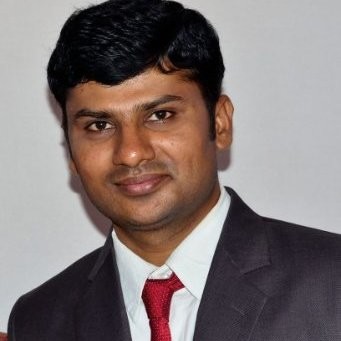
Devaraju Narayanappa
Technical coordinator of the TerraDT project. Climate scientist and experienced researcher with a demonstrated history of working in the research Institutions. Skilled in Ecosystem-Climate interactions, Climate Change, Mathematical Modeling, Large Data Analysis using Python.
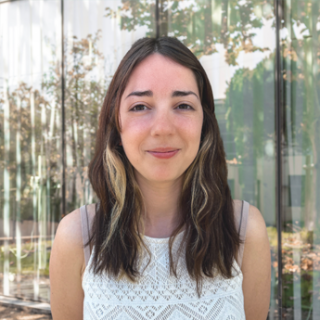
Inês Girão
Geospatial Analyst at +ATLANTIC (Collaborative Laboratory for the Atlantic Ocean) with a background in geography. In TerraDT, Inês works on connecting km-scale climate simulations with local, city-level applications, helping planners and policymakers understand how climate change affects urban environments (e.g. heat stress, air quality, livability) and how to adapt effectively for a more resilient urban environment.

Jaana Bäck
Professor Jaana Bäck graduated in tree ecophysiology, and currently she works at the University of Helsinki, Faculty of Agriculture and Forestry as professor in Forest-atmosphere interactions and leads the Ecosystem processes research group. She is coordinating the Integrated European long-term ecosystem, critical zone and socio-ecology research infrastructure (eLTER RI) projects in the Environmental RI domain of European Strategy Forum on Research Infrastructures and participating in the Global Ecosystem Research Infrastructure initiative GERI. She has published 162 peer review articles and her H index is 43 (Scopus).

Anu Riikonen
Anu Riikonen, Dr. Sc. in Agriculture and Forestry. Currently working as a senior specialist in landscape planning, Sitowise Oy, Espoo, Finland. Around 20 years of experience in various projects, both research and practice, in urban greening, especially urban trees, soils, and urban ecosystem ecology.
Anu is a member of the TerraDT User Advisory Group

Liisa Kulmala
Liisa Kulmala is a climate and ecosystem scientist specialising in how ecosystems influence the climate and how the climate shapes ecosystems. She leads projects developing MRV systems, carbon‑farming pilots, and evidence‑based environmental solutions using multi‑source observations, process‑based modelling, and AI. Her experience spans over EU research initiatives as well as applied urban‑nature projects.

Isra Mohamed Hussein
Coordinator in the Strategic European Engagement and Coordination team, Isra started at CSC in summer 2025 as a coordinator trainee. Her educational background is in business studies at Aalto University, where her studies also emphasized internationality. Exchange periods abroad during her studies further strengthened her feeling that an international career was the right path for her. Before CSC, Isra worked in various fields, but after getting to know the startup world, she became interested in the technology sector.

Leif Backman
Leif Backman is a Senior Scientist at the Finnish Meteorological Institute. His research focuses on urban green areas, combining ecosystem modelling, observational data, and machine-learning emulators to quantify carbon uptake and release in urban ecosystem types under present and future climate conditions.

Dragana Bojović
Dragana Bojovic is a Senior Researcher and Knowledge Integration Team co-lead at the Barcelona Supercomputing Center, with a strong focus on knowledge transfer, stakeholder engagement and impact assessment in climate and environmental research projects. She has contributed to methodologies for evaluating communication, outreach and user engagement in European research initiatives, supporting effective connections between research outputs and diverse audiences.

Pablo Martinez
Pablo Martínez Díez is an architect who graduated from the School of Architecture of Barcelona. As co-founder of 300.000 Km/s, he has a strong background in the use of new forms of information (open, social, and big data) to address contemporary urban and territorial challenges through diagnosis, reporting, planning, and participatory processes. He is an expert in data workflows, from data gathering to publication. He is a pioneer in Spain in the use of open data for urban policy and an Associate Member of the Open Data Institute.

Antonia Frangeskou
Antonia Frangeskou is a Product Designer and part of the Knowledge Integration Team in Earth Sciences in the Barcelona Supercomputing Center, with a strong focus on user centered design approach with stakeholder and user engagement in climate and environmental research digital products. Currently in TerraDT, one of hair main focus is the definition, desing and implementation of the storytellin plaftform of TerraDT project.

Tero Aalto
After being the programme manager of the Nordic Cryosphere Digital Twin, Tero Aalto continues his work at CSC as Senior Coordinator focussing on Strategic European Engagement and Coordination. His current efforts focus on user and stakeholder engagement for Destination Earth, Climate DT and TerraDT.

Diana Urquiza
Diana leads the Product Design team in the Earth Sciences Department at the Barcelona Supercomputing Center. She designs products and services for the Earth System Services Group, focusing on climate, air quality, and the intersection of climate and health. Diana champions a Human-Centered Design approach, aiming to create experiences that promote safety and equity.

Jan Mateu Armengol
Team leader of the Air Quality Services team at Barcelona Super Computing Center, Jan Mateu Armengol's work focuses on improving cities climate resilience, modelling and analysing urban temperatures to increase the quality of life of people living in urban areas.