
TerraDT joins forces with the Svalbard Cryosphere Digital Twin (SvalbardDT) project to showcase the latest highlights of land ice digital twin development. The two projects share strong interest towards the Arctic region, focusing especially on Svalbard but with future potential for scaling the findings and applications to a global scale.
The workshop focuses on the user perspective, demonstrating the practical impact of the projects as well as inviting feedback from the participants. Ideas from the workshop will contribute to steering future development, to ensure that the projects' output will be relevant and accessible to future users. The other main theme of the event is building collaboration between projects.
The workshop is organised in conjuction with the IGS Nordic Branch Meeting 2026.
Please note that onsite registrations are now closed.
| 13:00–13:05 | Welcome and introduction | Tero Aalto (CSC) |
| 13:05–13:30 | Overview of TerraDT and updates
| Devaraju Narayanappa (CSC) |
| 13:30–14:00 | Introduction to the TerraDT Land ice Digital Twin Component and Impact Model
| Thomas Zwinger (CSC) Clemens Schannwell (MPI-M) Hauke Schmidt (MPI-M) |
| 14:00–14:30 | Overview of SvalbardDT
| William Harcourt (ABDN) |
| 14:30–15:00 | Coffee break | |
| 15:00–15:20 | Land ice data in TerraDT
| Geir Moholdt (NPI) |
| 15:20–15:40 | Glacier mass balance and firn modelling in TerraDT and SvalbardDT
| Ward van Pelt (UU) |
| 15:40–16:20 | Open collaboration discussion | |
| 16:20–17:00 | Land ice storytelling ideation lab
| Diana Urquiza (BSC) Antonia Frangeskou (BSC) |

Tero Aalto
After being the programme manager of the Nordic Cryosphere Digital Twin, Tero Aalto continues his work at CSC as Senior Coordinator focussing on Strategic European Engagement and Coordination. His current efforts focus on user and stakeholder engagement for Destination Earth, Climate DT and TerraDT.

Antonia Frangeskou
Antonia Frangeskou is a Product Designer and part of the Knowledge Integration Team in Earth Sciences in the Barcelona Supercomputing Center, with a strong focus on user centered design approach with stakeholder and user engagement in climate and environmental research digital products. Currently in TerraDT, one of hair main focus is the definition, desing and implementation of the storytellin plaftform of TerraDT project.
William Hartcourt
Lecturer at the University of Aberdeen. Researching cryosphere changes in the Arctic using Artificial Intelligence (AI), Earth Observation (EO) and field instrumentation. PI of SvalbardDT, a digital twin of Svalbard’s cryosphere that combines multi-modal remote sensing data to predict short-term variability relevant to local stakeholders.
Geir Moholdt
Researcher in glaciology and remote sensing, studying the mass balance and dynamics of glaciers on Svalbard and in Antarctica using both satellite- and field-based methods.
Devaraju Narayanappa
Technical coordinator of the TerraDT project. Climate scientist and experienced researcher with a demonstrated history of working in the research Institutions. Skilled in Ecosystem-Climate interactions, Climate Change, Mathematical Modeling, Large Data Analysis using Python.

Clemens Schannwell
Research scientist in the group of Dr Hauke Schmidt. Glaciologist with research interests in the area of ice dynamics of glaciers and ice sheets and their interactions with the ocean and atmosphere.
Hauke Schmidt
Hauke Schmidt leads the research group on “Globale Circulation and Climate” in the "Climate Physics" department of MPI-M.
He develops and applies numerical models to better understand processes in the atmosphere and climate system. In TerraDT he is involved in the efforts to couple a state-of-the-art ice sheet-model to the km-scale global climate model ICON.

Diana Urquiza
Diana leads the Product Design team in the Earth Sciences Department at the Barcelona Supercomputing Center. She designs products and services for the Earth System Services Group, focusing on climate, air quality, and the intersection of climate and health. Diana champions a Human-Centered Design approach, aiming to create experiences that promote safety and equity.
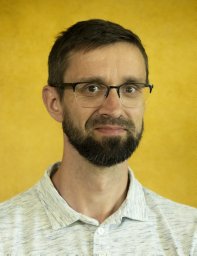
Ward van Pelt
Senior lecturer in physical geography at Uppsala University. His research assesses the impact of changing climate conditions in the polar regions on glaciers, ice sheets and seasonal snowpacks. Key tools include a mass balance model and ice thickness estimation method. Ward also coordinates glacier fieldwork in Sweden, Svalbard and Antarctica.
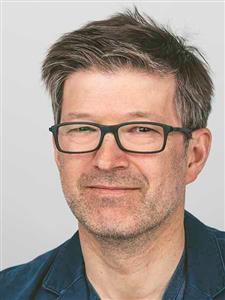
Thomas Zwinger
Thomas Zwinger, Adjunct Professor at the Department of Physics at the University of Helsinki, is currently a Senior Application Scientist at the CSC-IT Center for Science. Specialist in geophysical continuum applications (avalanche flow, ice-sheet and glacier as well as permafrost and hydrology models), in particular in combination with high performance computing (HPC). He is one of the developers of the state-of-the-art ice-sheet model Elmer/Ice
The workshop will take place in Fram Centre [Google Maps], in Tromsø, Norway.
Please find below a list of potential accomodations:
- For budget: Ami Hotel, First Hotel Viking/Amalie, Thon Hotel Polar, Quality Hotel Grand/Saga
- For comfort: Clarion Hotel The Edge, Scandic Ishavshotell